"Bhai ye baat apne mein hi rehne de..."
They scroll.
They distract.
They avoid.
Overwhelmed by group chats and forced positivity, Gen Z retreats into isolation rather than seeking help.
Standard clinical apps feel like homework. Filling out mood charts feels exhausting, not relieving.
Fear of privacy breaches or being labeled "sick" prevents them from keeping wellness apps on their main screen.
Designing for a demographic that demands extreme privacy and rejects clinical jargon.
B.Tech Student • Tier-2 City
Junior UI Designer • Bangalore
Conversational tone over clinical diagnoses. Feeling like a friend, not a doctor.
Zero-friction inputs. One-tap mood tracking without paragraph-long explanations.
Immediate grounding exercises (breathing techniques) accessible in seconds.
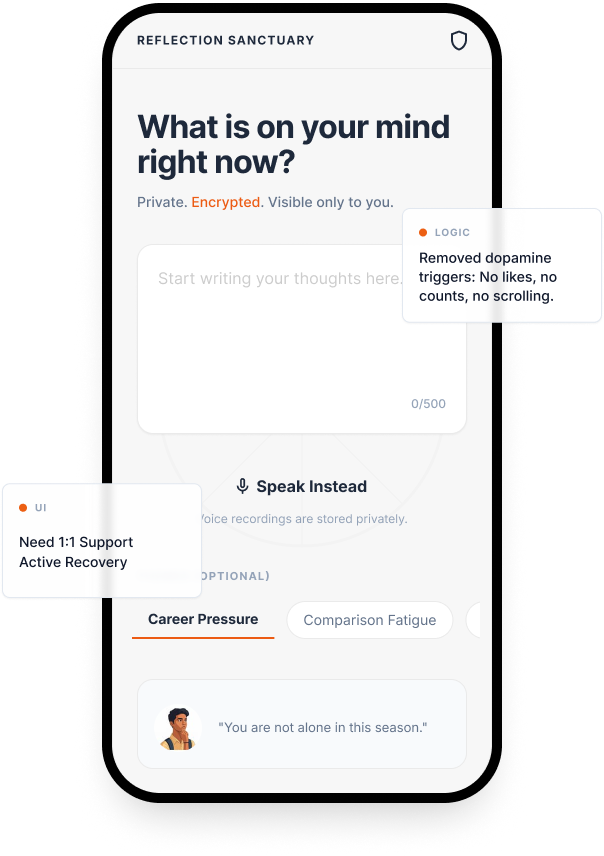
Absolute privacy. Ghost-mode journaling that disappears if required.
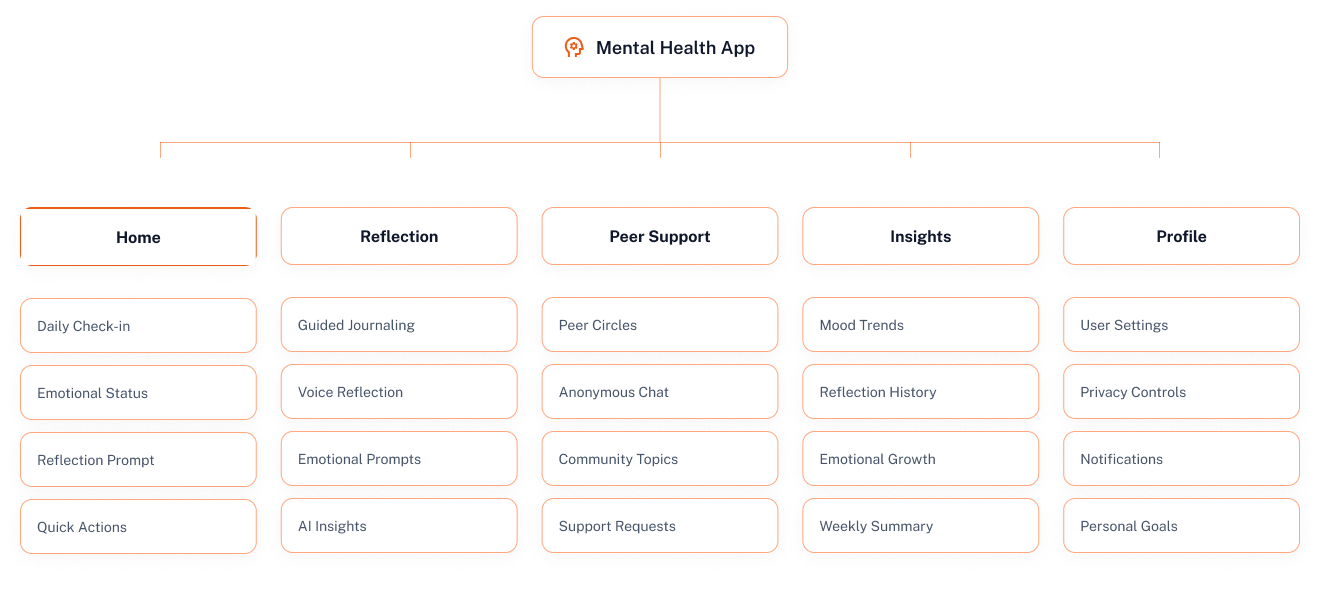
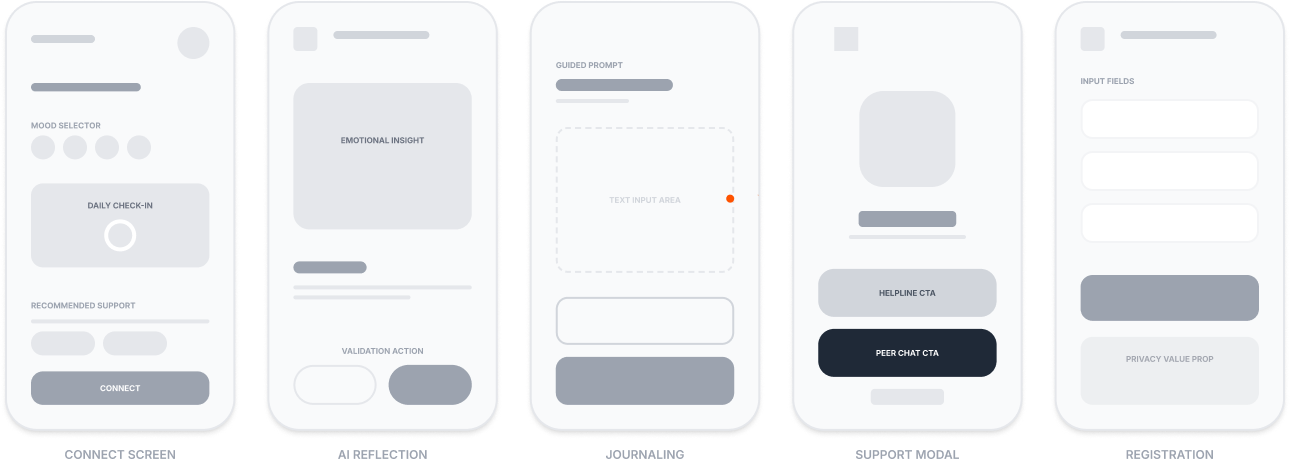
Before rendering high-fidelity pixels, we mapped the core emotional journeys. Our wireframing phase focused strictly on structural clarity and removing cognitive friction.
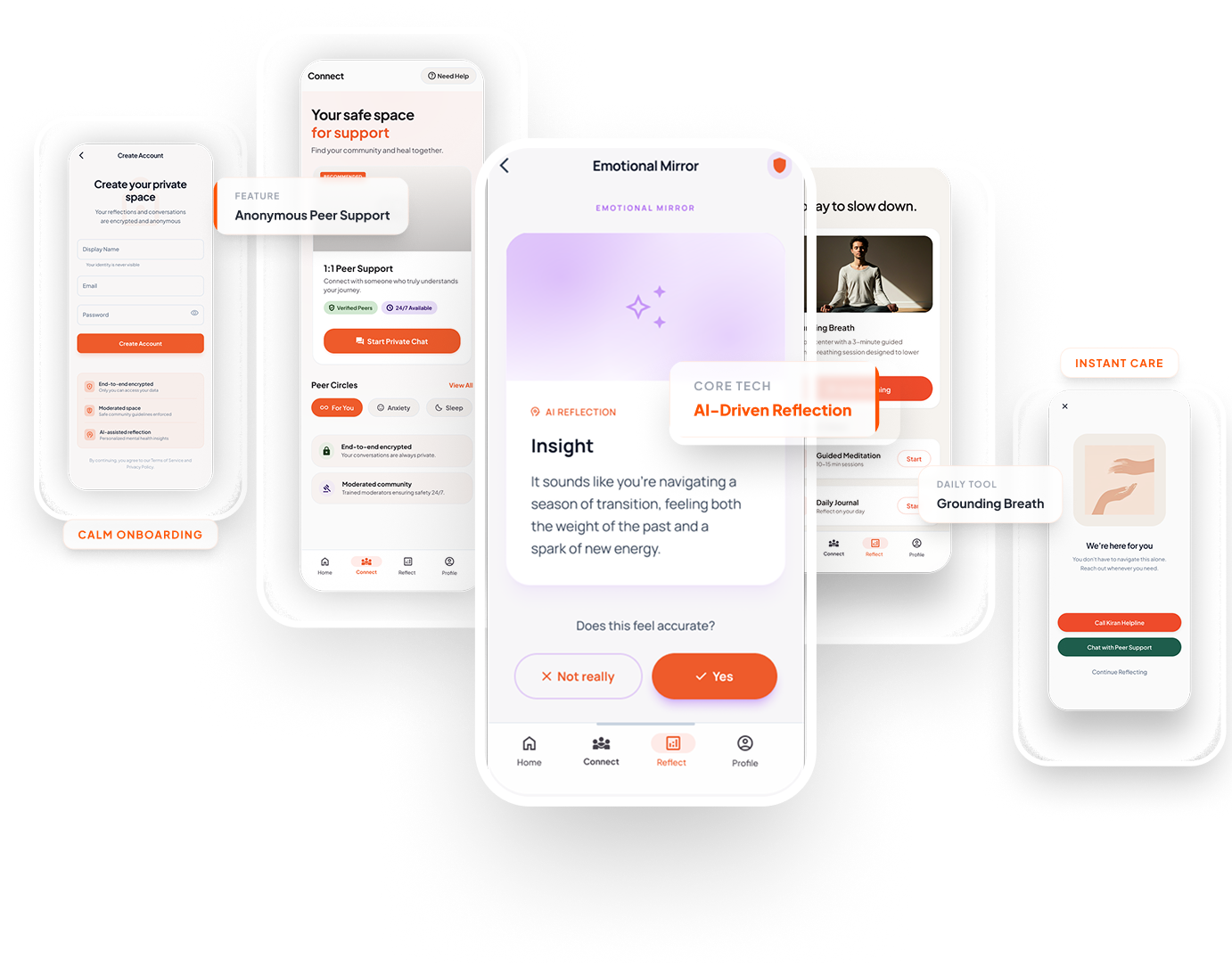
We translated the wireframes into a warm, inviting interface completely devoid of clinical triggers. Every interaction was designed to intuitively feel like a deep breath—calm, secure, and profoundly human.
Instead of generating generic wellness tips, the Sakha AI strictly interprets the emotional tone of the user’s check-in to dynamically adjust the UI colors, haptics, and tool suggestions. It listens, adapting the environment silently.
Higher Daily Retention than standard clinical apps.
Average time to find a relief tool, down from 2 minutes.
Users re-assessed their emotional state correctly.
We often design mental health apps to "fix" people. But Gen Z doesn't want to be fixed. They want agencies to manage their own chaos safely.
The UI's primary job isn't to diagnose—it's to hold space.
Have a project in mind or just want to chat about design?
Connect Now